

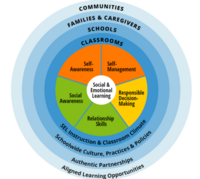
Social awareness is the ability to understand that others have feelings, empathize with those feelings, and be aware of diverse backgrounds and the context you are interacting with others. This is a very difficult, but important, concept to teach in kindergarten. Developmentally, most students are focused on themselves. As we teach about emotions and self regulation, we begin to discuss how our actions and feelings impact others. I use the Positivity Project daily lessons and read alouds in class to introduce these concepts. Learning opportunities also arise during class that I use to provide examples of how we can be empathetic and understanding of others. I also discuss all cultures and major holidays that are celebrated in our class and ask students to share. I highlight some similarities to build connection but the discussions also allow students to see that not everyone has the same experiences that they do. It is an on-going process throughout the school year that becomes easier for the students as they mature.


