Students as Content Producers- Part 1 Public

Fairport Test

Required Evidence

1- Welcome: Students as Content Creators Badge

Welcome to the Students as Content Creators Badge. This is a great opportunity to explore what we, as teachers, accept as evidence for learning and how we can empower students to become Content Creators. More Info

2- Introductions

Share the following: 1. Your name, building, and assignment 2. What do you enjoy most about teaching? 3. In your opinion and considering your teaching assignment, what is a barrier to students becoming content producers? Required Evidence: Post either a written response or record a video response. More Info

3- Reflection on Current Practice

Read Seth Godin Blog Post- What does it mean to do well in school? https://seths.blog/2021/02/what-does-it-mean-to-do-well-in-school/ Reflection Question: In your opinion, what does it mean to do well in school? Required Evidence: Post a short reflection below in Badgelist. More Info

4- Build Background

Read/Watch/Listen to the provocations below in the description and consider their implications on your work with students. Required Evidence- 3,2,1 Written response posted to Badgelist 3- Key takeaways from the readings, videos, and podcasts 2- Questions 1- Something I might like to try More Info

Optional- Recommended Further Readings

Please see below for a list of recommended books, articles, blog posts, and podcasts. No evidence required. More Info

5- Brainstorming

Based on your learning so far, choose a unit that you would consider students ‘constructing’ their knowledge versus a quiz, paper, or test. Consider consulting with a Coach to talk about goals for the unit, the criteria and constraints for the project, and technology to introduce to your students. More Info

6- Explore Tech Tools

Explore potential tech tools to introduce to students using the Instructional Technology Support Website or with a Tech Coach. No evidence required. More Info

7- Plan and Launch the Project

Plan and launch the project with students. Write the project criteria and constraints for students and determine the assessment criteria. Introduce the project to students. Required Evidence: Post project prompt (criteria and constraints) and any associated materials to Badgelist. More Info

8- Document the Process

During the project process, document the learning with pictures, videos, anecdotes, student interviews, etc. Required Evidence: Provide evidence of process from the classroom. Add images, videos, etc. to Badgelist (or add to a Google Photos Album to share multiple). More Info

9- Share Outcomes

Share links of completed student work in the form of pictures, videos, or links to completed student work. More Info

10- Reflections

After completing the project with your students, reflect on the experience. These reflections can be submitted in writing or through an interview format (video or audio recording). Please see below for potential focus questions for the written piece or interview. More Info

Badge Overview

Required Reading/Listening/Viewing

Why: Setting the Table for Student Content Production

John Spencer- https://youtu.be/BYBJQ5rIFjA- The shifts in moving from Compliance to Engagement to Empowerment (Video 2 Minutes)

Akimbo Podcast Seth Godin- The Long Term- 
https://play.acast.com/s/akimbo/thelongterm ; (Please start at 21:17) (Click here for the transcript of Seth Godin’s answer to the question) https://docs.google.com/document/d/19O8AQPyXM0u3AYOff4bUiQQ0HSqqRa5LjERG7wJEoWs/edit?usp=sharing

Sir Ken Robinson- Do Schools Kill Creativity? 
https://www.ted.com/talks/ken_robinson_says_schools_kill_creativity ;- Sir Ken Robinson makes an entertaining and profoundly moving case for creating an education system that nurtures (rather than undermines) creativity. (TED Talk- 19:32)

Daniel Pink- The Puzzle of Motivation- 
https://www.ted.com/talks/dan_pink_the_puzzle_of_motivation- ;Traditional rewards aren't always as effective as we think. Daniel Pink explores the research of how we can unlock creativity in and motivate others and break down the mismatch between what science says and what we typically do. (TED Talk- 18:23)

What the research shows us: 
Intrinsic and Extrinsic Motivation: Classic Definitions and New Directions- 
https://selfdeterminationtheory.org/SDT/documents/2000_RyanDeci_IntExtDefs.pdfRichard Ryan and Edward Deci (2000) (12 Pages). This research article explores the difference between intrinsic and extrinsic motivation and its impact on educational practice. 

Autonomy, Competency, and Relatedness in the Classroom- 
https://idainstitute.com/fileadmin/user_upload/Downloads/Transitions_Management/Resources/Theory_and_Research_in_Education-2009-Niemiec-133-44.pdfChristopher Nieliec and Richard Ryan (2009). (9 Pages). This research article explores Self-Determination Theory (SDT) and how it applies SDT to educational practice. A major finding, “Thus, in classroom contexts that support satisfaction of autonomy, competency, and relatedness, students tend to be more intrinsically motivated and more willing to engage in less interesting tasks and to value academic activities. With higher volition, learners demonstrate higher-quality learning outcomes, enhanced wellness, and a greater value for what school has to offer” (Niemiec and Ryan, 2009, p.140).

What: Implementing the research into your practice: 

Making the Leap: Students as Creators, not Consumers: 
http://blog.scootle.edu.au/2016/11/02/making-the-leap-students-as-creators-not-consumers/ ;(Online Article- ~5 minutes) A practical piece about making the leap to allowing students to move from content consumers to content creators. From the article: “So consider taking the leap, and encouraging your students to take a more active role in their learning. With each small change, a little bit of lava cools and becomes solid ground. We are in the midst of challenging times, and it will not be easy; however, even the smallest changes may result in great rewards, as our students surprise themselves with just how much they can achieve. While technology creates disruption, it also creates potential. For after every volcanic explosion, the soil is more fertile than ever.”

38 Ways Students Can Create Digital Content - https://k12.thoughtfullearning.com/blogpost/38-ways-students-can-create-digital-content - (Online Article- 3 minutes). Explore 38 possibilities for student content production ideas. 

Bloom's Taxonomy Digital Planning 
https://www.teachthought.com/learning/what-is-blooms-taxonomy-a-definition-for-teachers/ ;(Chart ~2 minutes). This chart helps you target the varying levels of Bloom’s taxonomy and suggests ideas at the varying levels. 

Knowledge of Content and Application of Knowledge 
https://1.bp.blogspot.com/-LFhWnFPcm_I/WKxM1xA_LmI/AAAAAAAAELM/wj_Rv2vrqEsgLb0nI08fr7RX5Ta7g4GYgCLcB/s640/TechUseByQuadrant.jpg ;(Chart ~ 2 minutes). When you are looking to plan a project, this chart is helpful in writing the prompt.  

We Want Students to Be Creative, But How Do We Assess This? John Spencer 
https://spencerauthor.com/creative-assessment/ ;(Blog Post, 15 minutes) As you finalize the plan for your project, you will want to consider how you will assess student learning. This blog post is filled with recommendations for how to decide what to assess and the best ways to provide feedback to students. 

Students Should Show Their Process, Not Just Their Product, John Spencer 
https://spencerauthor.com/seven-reasons-to-show-your-work/ ;(Blog Post, 10 Minutes). In this article, the author emphasizes the importance of documenting the work process and how it amplifies that the process is as important as the outcome. This will come in handy as you, and your students, document the work within this Badge. 


Recommended Further Reading/Listening/Watching- NOT REQUIRED

Why:
John Harris- How Students Can Become Creators instead of Consumers of Content-
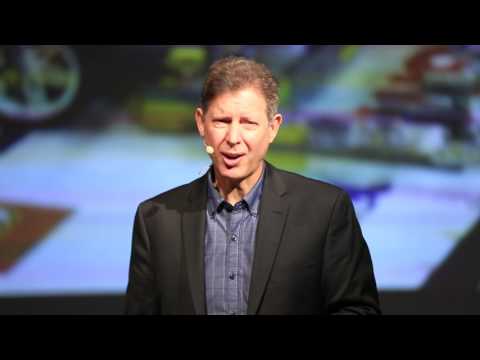
; Lessons learned of allowing students to become creators. Using technology to serve a higher vision. (TED Talk- 20:06)

Modern Learners Podcast- 
https://modernlearners.com/63-gary-stager/ (Podcast 1:15) Will Richardson and Gary Stager talk about how a project can replace instruction. This is a provoking podcast that will make you think a lot about how projects can replace direct instruction. Please note, there are a few moments of adult language within this podcast conversation. 

All I Really Need to Know (About Creative Thinking) I Learned (by Studying How Children Learn) In Kindergarten, Mitchell Resnick
https://web.media.mit.edu/~mres/papers/kindergarten-learning-approach.pdf (6 Pages). Resnick applies SDT to practice and looks to share a map of student learning. 

Reach for Greatness, Yong Zhao 
http://zhaolearning.com/2018/02/02/stop-looking-at-my-bad-leg-introduction-to-my-new-book-reach-for-greatness/ ;(2018) (Introduction- 8 pages). Y. Zhao explains his path to success as he explores autonomy, mastery, and relatedness. 

Further Reading Full Length Books

Invent to Learn- Book by Gary Stager and Sylvia Martinez 
https://www.amazon.com/Invent-Learn-Tinkering-Engineering-Classroom/dp/0997554371/ref=as_li_ss_tl?crid=TNHMKYA8XNG9&keywords=invent+to+learn&qid=1555726775&s=books&sprefix=invent+to+learn,aps,174&sr=1-1-spons&psc=1&linkCode=sl1&tag=cmkpress-20&linkId=497211f6fc006e3379d724c72b613d3b&language=en_US

Stop Stealing Dreams- Seth Godin 
https://seths.blog/wp-content/uploads/2019/05/stop-stealing-dreams6print.pdf

Lifelong Kindergarten- Mitchell Resnick 
https://www.amazon.com/Lifelong-Kindergarten-Cultivating-Creativity-Projects/dp/0262037297

Drive- Daniel Pink 
https://www.danpink.com/books/drive/

Reach for Greatness, Yong Zhao 
https://books.google.com/books?hl=en&lr=&id=PexFDwAAQBAJ&oi=fnd&pg=PP1&dq=Zhao,+Y.+(2018).+Reach+for+greatness:+Personalizable+education+for+all+children.+Corwin,+a+SAGE+Publishing+Company.&ots=AV_OLw6tqF&sig=Bl2hL07P-KyYKZR_d3IIuwT4_FQ#v=onepage&q&f=false


Reflections

Participant Action: After completing the project with your students, reflect on the experience. These reflections can be submitted in writing or through an interview format (video or audio recording). 
  • Has your belief of what does it mean to do well in school changed?
  • How did this experience change how you think about student content production?
  • Were you able to reach your goal?
  • What is your next step if you did or did not reach your goal?
  • What is something you learned that would help others with this Badge? 
Required Evidence: Written reflection or video recorded/audio recorded interview posted to Badgelist


Badge Experts


Nate Ruder

nruder

Badge awarded on 4/8/21

Badge Learners


Bonnie Lamonaco

Bonnie-Lamonaco

Joined badge on 4/6/21
 

Emily Jang

Emily-Jang

Joined badge on 4/6/21
 

Kathryn Lechleider

Kathryn3

Joined badge on 4/6/21
 

Mark Trawitz

MarkyT

Joined badge on 4/6/21
 

Matthew Rose

Matthew-Rose

Joined badge on 4/6/21
 

Sara Cordsen

Sara-Cordsen

Joined badge on 4/6/21
 

Sarah Farrelman

Sarah-Farrelman

Joined badge on 4/20/21
 

Stephanie Laurence

Stephanie17

Joined badge on 4/6/21
 

Travis Wood

TWood249

Joined badge on 4/6/21