
TEDTalk- The Danger of a Single Story

Part 2: Watch - "The Danger of a Single Story"

Only editable by group admins

  • Last updated December 1, 2022 at 9:00 AM by sweethometc
  • Evidence visible to public
Watch the full Ted Talk video.

In this Task...

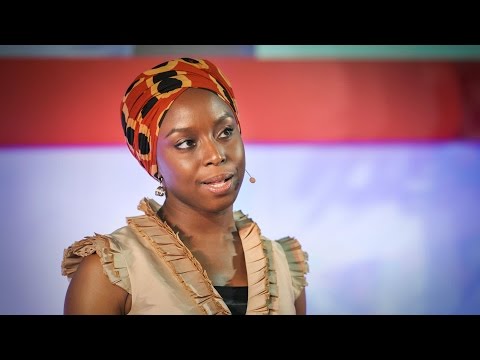
Our lives, our cultures, are composed of many overlapping stories. Novelist Chimamanda Adichie tells the story of how she found her authentic cultural voice -- and warns that if we hear only a single story about another person or country, we risk a critical misunderstanding. 

TEDTalks is a daily video podcast of the best talks and performances from the TED Conference, where the world's leading thinkers and doers give the talk of their lives in 18 minutes.  TED stands for Technology, Entertainment, Design, and TEDTalks cover these topics as well as science, business, development and the arts.

Resources...

The Danger of a Single Story


Transcript: 
https://www.classacthr73.org/resources/Documents/Event%20Materials/Chimamanda%20Adichie%20The%20Danger%20of%20a%20Single%20Story.pdf


After watching the video, "The Danger in a Single Story," you should be able to answer the following questions:
  1. What kinds of characters did Adichie write about as a young girl, and what did these characters do? Why is it significant that Adichie chose to write about those characters and their lives?
  2. Why did it matter that Fide’s brother had made a beautiful patterned basket? How did that affect Adichie’s understanding of the story of Fide’s family?
  3. What expectations did Adichie’s roommate have about Nigeria and Africa more broadly? According to Adichie, what gave her roommate these expectations? How does it relate to Adichie’s previous point about the story of Fide’s family?
  4. Why did Adichie’s professor think her novel lacked authenticity?
  5. What did Adichie witness during her trip to Guadalajara that surprised her? Why was it surprising to her? What did this make her realize?
  6. Why would starting a story with “secondly” affect different communities? What are examples that Adichie gives?
  7. Why did Adichie tell the student that it was a shame that young Americans were serial murderers? What was different about Adichie’s understanding of America versus the student’s understanding of Nigeria?
  8. Adichie describes negative experiences she and her family and friends have experienced in Nigeria, including poor healthcare and education, limited water, repressive governments, and poverty. She also mentions war crimes and unemployment. How, according to Adichie, do these stories fit into the stereotype of Africa as a “continent full of catastrophes.” What, according to Adichie, is the problem with stereotypes?

Evidence of Learning...

  1. Now What??  As an educator, reflect on how Adichie's TED Talk might help our community, our school, and your classroom.
  2. Why do you suppose the video from Part 1 "What Makes History Useable," paired with the TED Talk "The Danger of a Single Story?"


All posted evidence

Part 2

This Ted Talk perfectly expresses the many thoughts I have had in my first few years at Sweet Home.  I thought I knew exactly what it would be like and was sure that it would be similar to my previous job.  I could not have been more wrong. I assumed that one town over was exactly like West Amherst and that I was prepared.  I was not, but I am so glad for this eye-opening experience.  Our students have their own unique stories.  Some are just like my story; middle-class white kid growing up in the suburbs of Buffalo.  Others are the children of immigrants who have come to teach or work in the US.  Some are children of poverty and many have experienced more racism and stereotypical behavior than anyone their age should! I did not think there was a single story, but that there were a few stories.  And the most difficult of scenarios, some have no family at all!  Even my past way of thinking took away individual voices and stories.  I never want to be guilty of that again.  When one believes in a single story, he or she takes away the dignity, voice and power from others.  We must do just the opposite.  We should give respect, dignity, a voice, and power to every one of our students, teachers, support staff, and really all who are in our school district.  People who are and feel valued will be more productive and well-adjusted.  Each story makes for a unique, diverse community where each story matters.  That is what I try to foster in my classroom.  

The videos were supportive of one another. The old adage "knowledge is power" has a lot of meaning.  If we fail to learn the stories of the past, we may repeat gross injustices.  A person who shares their personal experiences, spoken or written, IS our history.  Learning the past stories of others will help us see things through a different perspective, one which we may not ever have.  There would be so much less division if everyone in the classroom could realize that there are many more stories than just one. 
chrissy Over 2 years ago

Response 1 & 2

1:The lessons taken from The Danger of a Single Story that can be applied to our community and classrooms are that we need to take the time to build relationships and not paint our students and community members with broad strokes.  Everyone has a different story With varied experiences.  I found it eye-opening years ago when multiple Arabic students in the same room had a challenging time communicating with one another in Arabic.  I learned quickly as they explained that there are many dialects in Arabic.  I hadn’t really thought about this before and I had to change my thinking about what it means to be Arabic speaking.  This video reminds me of that experience and ever since then, I have tried to hold on to that experience.  I think it has helped me as an educator to seek out a better understanding of my students and not fall into the trap of grouping those who look, speak, or come from a similar place as the same.
2:I think that these videos were paired together because the messages, when combined, can be a major agent of change if you listen.  Thinking about the concept of learning through the stories that history tells us is important but, if you do not offer a “balanced” approach to these stories and offer multiple perspectives you can easily fall into the traps of creating a single story.  History is written by the winning side, so it falls on us as educators to try and seek out multiple perspectives so that we can teach our students to do the same.  
brent-peterson Over 2 years ago

Impact on the Classroom

I think the concepts in Adiche's TED talk are important for everyone to understand.  This TED talk has been used to help spark discussions of what single stories people have used against us, what single stories we too have been guilty of believing, and to introduce or further a study of "othering."  This can be connected to so many different readings, whether it be current events as we take a look at what narratives exist about certain groups today, or extending the study through a work of fiction.  In recent years, a unit I've started with this TED talk has led students to discussions about the rise in hate crimes against Asian Americans during the pandemic, or as a work of fiction, I like to offer up Nadine Gordimer's "Once Upon a Time."  The story serves as an allegory for the Apartheid, but even without that context, it symbolically shows the dangers of trying to isolate ourselves from others. 

I think the most important thing we can take away from this knowledge is the importance of getting to know a more complete story of the people we interact with, whether that be through things like understanding cultural norms, as we covered in our PD last week, or creating space for people and students to share things others might not have known.  I love doing this through creative writing, or whole class poems, but also student presentations and whole class discussions.  I would love to see this be a part of some larger school initiative or event!  After talking about it at our fall superintendent's day I think it was clear that these conversations must take place in our community as a whole.   As we learned from the video in part 1, having this knowledge of people's stories, or past, can help us be better in the present and in the future.
hannah-schultz Over 2 years ago

Danger of a Single Story...

For me, as an educator and an TESOL professional, there are two major takeaways from the Danger of a Single Story. The first is that relationships are KEY. We cannot know our students or our colleagues likes, dislikes, interests, strengths, areas of growth etc. etc. without getting to know them deeply. Building a deep, connective relationship means listening to each other and not making assumptions. It means taking the time to be in community with one another. When you take the time to build a relationship with a student, you are opening opportunities for learning and exploration. The second takeaway is that we must have both cultural proficiency and cultural humility. Cultural proficiency is when we have knowledge, understanding, and background of culture and the impact on individuals and institutions. Cultural humility is the belief that you do not know everything, and that you are able to be humble, listen and learn. 
emily-mielcarek Almost 3 years ago

We need to do the legwork to know each child as an individual and help them feel welcome and a part of our community.

I think it is important to understand that each student is different, and we cannot make assumptions.  All families look different, and all families have different histories.  One thing we have worked hard to do all Willow Ridge is build a lending library full of diverse books.  We change the feature books each month to represent different holidays, different abilities, different interests and different families.  Classroom teachers are welcome to borrow them, and share these with their students so everyone can see themselves in the books we read. We have utilized SHEF grants and other grants to help us build this library.  I believe these videos go together because we cannot make assumptions about our students, and we need to do the legwork to know each child as an individual and help them feel welcome and a part of our community. 
melissa-erikson Almost 3 years ago

Part 2

  • Now What??  As an educator, reflect on how Adichie's TED Talk might help our community, our school, and your classroom.
  • It is important to educate yourself and be open to the many different ways that people identify themselves as and to not base judgement on stereotypes or preconceived notions. To allow opportunities for everyone to express themselves in the way they are most comfortable and to be accepting. Embrace all members of our community and create a culture of acceptance. Amplify the voices of groups that have not had an opportunity to be heard and give them a seat at the table. 
  • Why do you suppose the video from Part 1 "What Makes History Useable," paired with the TED Talk "The Danger of a Single Story?"
  • Because facts are important when learning about any one thing. Knowing the history of something can give you insight into why things are the way they are now and how things could be in the future. 
  • jessicawhitcomb Almost 3 years ago

    Pt 2


    This TED talk is so powerful and carries a message that can empower change.  The conversations needs to begin in one's home. As a mother of 3, I began to think about how impressionable and vulnerable my children are—they are sponges absorbing what they see, hear & read. My husband and I have become mindful of the language we use, shows we watch and how we treat others-especially in front of the kids. How we broach our children’s questions on individuals, cultures, diversity, etc. holds such weight. This can impact their next interaction with someone and perceptions.

    Popular culture and social media has overwhelming shaped our students’ understanding of the world in both positive & negative ways. We should be advising others to view these with items with caution and that they are not the full picture. As a teacher, this TED talk reaffirmed the importance of teaching events and topics with multiple perspectives and sources. (In addition to questioning the source of information.) I began to reflect on my most recent unit that I taught in global on imperialism- did I show enough of the + and - effects? Could I add in more narratives? Did I show multiple angles of this event?

    These two videos tie together beautifully with the idea that many stories and narratives matter. They can empower and humanize individuals & repair dignity that is lost through negative stereotypes. I love the idea of a community embracing their similarities in lieu of emphasizing their differences. We need to engage & expose our students to multiple stories to avoid the single story.
    cutzig Almost 3 years ago

    Part 2

    1.   Now What??  As an educator, reflect on how Adichie's TED Talk might help our community, our school, and your classroom.
      • I absolutely love this TED talk on “A Danger of a Single Story”.  I find it so valuable for every individual to hear and so applicable to the history classroom.  I think every person should see this and watch it from time to time to remind themselves of the differences that are out there, how people may see things from an alternate lens, and to remind us to be more understanding before we jump to conclusions and assume we know it all.  This is far too often how our communities, social groups, and even political leaders act.  We are quick to assume and do not take the time to examine and appreciate the many perspectives that are out there and what others may be dealing with.  I will most definitely use this in my classroom as an intro to one of our perspective lessons.  I just did this today in class and will probably play this video tomorrow to lead off a reflection post lesson.  I do a lesson called “Power of Perspective” in a few different units during the year to help students expand their views and look at things from different angles.  For the Rape of Nanjing, Estates of France, European and Africans during imperialism, etc…. The list for where this could be applied in Global Studies is infinite. As a Social Studies teacher, I personally prioritize teaching more than one story to teach the content, but more importantly to build empathetic and social developed citizens in my students. We are shaping future voters and civic participants in our classrooms.  I can think of no better place or way to teach our students to understand the humanity around them more.
     2.   Why do you suppose the video from Part 1 "What Makes History Useable," paired with the TED Talk "The Danger of a Single Story?"
      • I think the part 1 and part 2 videos are paired together because it bridges the importance of understanding background and personal history to fully capture what is going on in the world around us.  The world around us and our individual lives have been shaped for hundreds of years based on the experiences of those who came before us (both good and bad).  Having a full understanding of what got us or our community to this point will make us more informed and capable of choosing the best path possible. Today we are much more than a teacher, a student, a wife, a friend, etc….  We are a religion, a social class, a community member, a victim of abuse, a person struggling with mental illness, a child forced to move to a new school.  Scenarios and circumstances are abundant and shape who we are.  It is our responsibility as humans to receive all of the circumstances of those who surround us and make up the world.  In the age of social media there is so much more exposure for the youth of today.  Sometimes this makes me scared, but sometimes I think this is such a gift to be celebrated.  The youth today have the world of other people’s stories at their fingertips. My hope is that we consistently teach them to be open minded, consider the whole picture when trying to understand a person or event, and to take accountability that circumstances for one are far different for another and we need to embrace that.
    dliberta About 3 years ago

    Reflection

    This TED talk was powerful. It warns us of the dangers of stereotyping. Adichie states that the problem with stereotypes is not that they are untrue, but that they are incomplete. They make one story become the only story. I love this. This couldn’t be more true. In this TED Talk, Adichie argues that “when there's only a single story about a group of people, it robs them of their dignity. The single story reduces people, rendering them incomplete, flat, one-dimensional. As a result, it becomes difficult to recognize equal humanity in the characters of a single story.” History education can at times be dehumanizing, rendering the “characters” flat or one dimensional. This depends how history is taught. Over the years, history education has come a long way from merely memorizing facts and dates. In the video, what makes History Usable, the narrator challenges the single story when he had his students examine migration patterns in is home city of Detroit. As his students collected stories, looked for similarities and differences in their research, examined changes in migration patterns, examined and analyzed multiple sources of evidence, they were doing history. Working with primary sources to construct narratives, looking at individual, community, national and global stories, and framing events in different ways allowed them to make sense of the past and present in an effort to anticipate their futures. When teaching history, emphasis should be placed on how historians study, construct and make sense of the past. This is integral in showing students that history is a matter of interpretation. That voice matters. When selecting primary source documents for kids to examine, it’s important to pay attention to multiple perspectives. Race, ethnicity, gender, politics, religion, geography and socio-economic status matter. Empathy and understanding matter. As stated previously, when kids study history and can see themselves in the story, that encourages a sense of belonging. We are all part of a community. We belong to nations, religions, small groups, and professions. We are shaped by our economic conditions, our ethnic background, and our gender. We become better caretakers of our communities when we have diversity of thought. As Adichie states “Power is the ability not just to tell the story of another person, but to make it the definitive story of that person.” This is extremely powerful. A teenager living in their world of social media can absolutely relate. Exposing kids to this way of thinking about history and how its constructed will help them make sense of our world. As the narrator of the video stated, history is less about recalling and memorizing facts and is more about discovering and seeing big ideas. As teachers, we need to engage our students, we need to make them feel as though they are seen and heard and that our stories matter. That one story is not the only story.    
    mbruce About 3 years ago