
TEDTalk- The Danger of a Single Story

Part 2: Watch - "The Danger of a Single Story"

Only editable by group admins

  • Last updated December 1, 2022 at 9:00 AM by sweethometc
  • Evidence visible to public
Watch the full Ted Talk video.

In this Task...

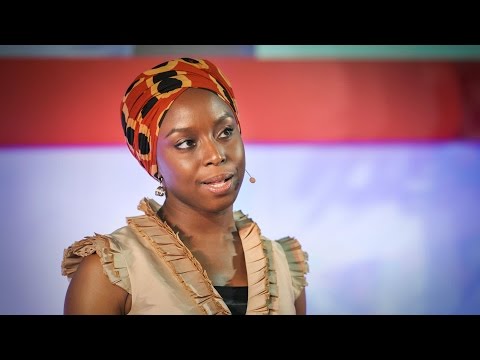
Our lives, our cultures, are composed of many overlapping stories. Novelist Chimamanda Adichie tells the story of how she found her authentic cultural voice -- and warns that if we hear only a single story about another person or country, we risk a critical misunderstanding. 

TEDTalks is a daily video podcast of the best talks and performances from the TED Conference, where the world's leading thinkers and doers give the talk of their lives in 18 minutes.  TED stands for Technology, Entertainment, Design, and TEDTalks cover these topics as well as science, business, development and the arts.

Resources...

The Danger of a Single Story


Transcript: 
https://www.classacthr73.org/resources/Documents/Event%20Materials/Chimamanda%20Adichie%20The%20Danger%20of%20a%20Single%20Story.pdf


After watching the video, "The Danger in a Single Story," you should be able to answer the following questions:
  1. What kinds of characters did Adichie write about as a young girl, and what did these characters do? Why is it significant that Adichie chose to write about those characters and their lives?
  2. Why did it matter that Fide’s brother had made a beautiful patterned basket? How did that affect Adichie’s understanding of the story of Fide’s family?
  3. What expectations did Adichie’s roommate have about Nigeria and Africa more broadly? According to Adichie, what gave her roommate these expectations? How does it relate to Adichie’s previous point about the story of Fide’s family?
  4. Why did Adichie’s professor think her novel lacked authenticity?
  5. What did Adichie witness during her trip to Guadalajara that surprised her? Why was it surprising to her? What did this make her realize?
  6. Why would starting a story with “secondly” affect different communities? What are examples that Adichie gives?
  7. Why did Adichie tell the student that it was a shame that young Americans were serial murderers? What was different about Adichie’s understanding of America versus the student’s understanding of Nigeria?
  8. Adichie describes negative experiences she and her family and friends have experienced in Nigeria, including poor healthcare and education, limited water, repressive governments, and poverty. She also mentions war crimes and unemployment. How, according to Adichie, do these stories fit into the stereotype of Africa as a “continent full of catastrophes.” What, according to Adichie, is the problem with stereotypes?

Evidence of Learning...

  1. Now What??  As an educator, reflect on how Adichie's TED Talk might help our community, our school, and your classroom.
  2. Why do you suppose the video from Part 1 "What Makes History Useable," paired with the TED Talk "The Danger of a Single Story?"


All posted evidence

Part 2

The Danger of a Single Story is such an important reminder for educators about the power of perspective. In our school, it can help people recognize that everyone’s experiences and backgrounds shape their views of the world. This encourages us to represent diverse voices in the curriculum so students see themselves as well as learn from others and reflect it in what they learn. In the health classroom, it challenges me to help students think critically about the stories they encounter in media, history, and even in their personal lives. When students understand that no single story defines a person or place, they develop empathy, curiosity, and respect for difference. This is why I try to share multiple sides of each lesson or perhaps controversial topics to allow students to see multiple stories and viewpoints. The TED Talk pairs perfectly with “What Makes History Usable” because both emphasize that history and storytelling are about perspective. Where Adichie warns against limiting people to one narrative, the history video reminds us that multiple perspectives make the past and the present more meaningful and relevant. Watching both videos is a valuable lesson to expand out worldview.
pawlak-jayna 2 months ago

Part 2: The Danger of a Single Story

1.Now What??  As an educator, reflect on how Adichie's TED Talk might help our community, our school, and your classroom. 

As an educator I believe Adichie’s TED talk will help our community, our school, and our classrooms. In the TED Talk, Adichie emphasized, “..how impressionable and vulnerable we are in the face of a story…” She reminds us of the importance of perspective and representation and how a single story can create stereotypes. “And the problem with stereotypes is not that they are untrue, but that they are incomplete. They make one story become the only story.” It is important to understand that there is never one single story that represents a place, and by moving beyond those stereotypes and assumptions we will be able to, “...regain a kind of paradise.” In our community, we should begin by recognizing the diverse voices and experiences of those who make up our community. This will create a more inclusive community that values diversity. In school, we should encourage students to share their stories and traditions to encourage an inclusive school environment. Additionally, in the classroom we should include culturally diverse and relevant lessons that incorporate more than a single perspective. 

2. Why do you suppose the video from Part 1 "What Makes History Useable," paired with the TED Talk "The Danger of a Single Story?"

The video from Part 1, What Makes History Usable was paired with Adichie’s talk because it emphasizes the importance of how stories shape perspectives. It is important to move beyond the stereotypes from a single story, and instead examine stories from multiple perspectives. When history is taught based on the voices of many, students not only gain a more accurate perspective of the past, but develop critical thinking skills about the world around them.
streebela 4 months ago

A Single Story

It's amazing to me that anybody can still have "a single story" mentality when it comes to race, kids, communities, schools, or anything. However, we all know some still do. In our world today, it's very unfortunate to see how divided we are, and we have to work very hard to teach our kids to not have a single story mentality when it comes to each other. We have to lead by example and it shouldn't be hard. It's important to embrace all members of our community and create a safe culture of acceptance. Taking the time to know the history of our students helps to give some insight into why they may act the way they do and how to help them in the future. This really reminds me how important it is to teach through multiple perspectives and sources all the while teaching the kids critical thinking skills.
dmann Over 1 year ago

Why do you suppose the video from Part 1 "What Makes History Useable," paired with the TED Talk "The Danger of a Single Story?

The power of adding narratives to one's studies, not just to history, is that it enables us to rad and think like historians and see how the past effected those who came before and those who will come after us. Having a single story is a dangerous territory to travel. For too often we do not stopped to think of how our version of someone's life or and event could be skewed or only part of what makes them who they truly are. For example, often Elementary Teachers teach about Christopher Columbus because there is a holiday with no school attached to it. I feel like a single story is taught about the explorations of Columbus, especially with younger children. I was once guilty of this too. It wan't until our district became more diversified and I was corresponding with parents about the month and mentioned there was no school in observance of Columbus Day. A vocal parent responded, I sure hope you are teaching what REALLY happened in our history. At first I was taken aback. Then I read the book Encounter to my class which was told from the point of view of a native boy whose life was changed drastically after the explorers came to his village. It was a beautifully told story, but one that my students had not heard before. The discussion that followed was fantastic and I realized that by not sharing this book or the view points of the same events from multiple perspectives leads to a single minded interpretation of history. I feel like by adding narratives to history lessons not only adds excitement and interest for students and teachers alike, but also allows students to see the connection to their own lives and how the past directly effects their future.

msionko Over 1 year ago

A single story

  1. Now What??  As an educator, reflect on how Adichie's TED Talk might help our community, our school, and your classroom.
This was a powerful Talk about her authentic story and how a single story has robbed many communities from displaying the array of experiences and variety that are truly experienced there. I appreciate her sharing the insights on the TED stage, and was convicted of a few single stories that came to mind. I appreciate that she also connected this to stereotypes and how stereotypes may have an element of truth but are very incomplete. That incompleteness is what should draw us to ask questions and to hear multiple perspectives in order to try to understand more fully. Questioning and hearing perspectives that are different than the one we are accustomed to hearing is essential for us to break the path of the single story. This "balance of stories" 
  1. Why do you suppose the video from Part 1 "What Makes History Useable," paired with the TED Talk "The Danger of a Single Story?"
The importance of adding narratives to history courses is what helps break this single story concept. In the first video they discuss how "narratives makes history more useful and usable". The second video points out the fact that multiple narratives are what truly make the story more complete and authentic. This takes the power away from facts and into "a balance of stories". Stories can empower and humanize the facts that can be shared in a content class. This connection between the two videos displays how classes such as history should use multiple layers of stories in order to have a more complete picture of history. 
rcarbrey Over 1 year ago

Part 2

 We all have our own optics that we look at things with. It is a good idea to take a step back and consider other vantage points. This creates understanding before we pass judgement on something or someone we know very little about (the single story). We have so many ways to access information, yet we often only consume one point of view on a story. Stay informed and listen to everything before you form an opinion. Often times that opinion begins to form before you hear the entire story.The simplest step is to eliminate your assumptions and generalities that “All like like ____” I use the example of a snow day or winter break. Maybe a student has a troubled home life and does not want to go home, or maybe something traumatic happened over that holiday break.

We need to be very careful not to assume.The same goes for rushing to judgement. Imagine you are collecting homework and the first 5 students say, “oops I forgot to do it” and the 6th student doesn’t have it but you don’t ask..you have heard enough and assume everyone forgot (your single story of what your students did) but this student may have had to watch their newborn brother last night, may have not slept at home last night. I have learned you do not have to see just one side or have one point of view on a task or event.
dtracz Almost 2 years ago

Part 2...

It's so important to understand our student's stories, where they come from, their trials, what they've been through, etc. It's important to breakdown any stereotypes that we may have or been taught, so that don't get in the way of our thoughts and actions towards our students. I love and appreciate the diversity that we have throughout our district, in our schools and in our classrooms. I love getting to know our students, their history, their religion, their culture and their story. And that all stories are not created equal and should not get in the way of how we view and perceive our students and their individual stories. All of our students are capable of far greater things despite their past experiences and where they came from. We need to accept and embrace our school's diversity, etc.
martjd28 Almost 2 years ago

It's important to understand that there our multiple stories and versions out there. It's important to accept the diversity that we have.

martjd28 Almost 2 years ago

How can we learn from this

Part of what makes Sweet Home great is our rich diversity.  However, what we have learned from this Ted Talk is that when we repeatedly see or hear a "single story" about a particular group of people through our media, literature, or in conversations, we are creating a stereotype that makes one story become the only story.  There are negative stories that happen all around the world, and the media only seems to focus on those stories rather than the positive ones.  When we meet people who are different than ourselves, we focus on those differences rather than how we are similar.  We need to learn about all the stories, to see both sides, to not just focus on the negatives.

The pairing of these two videos makes sense in that it teaches us that coming together and sharing stories from different perspectives, learning about the past, present and predicting the future with all of these different perspectives is a great strength.  It teaches us that we need to work with people that are different than ourselves and know various parts of the story and not just go with our own ideas.
kpiurek Almost 2 years ago

Now what?

As an educator, we need to be able to encourage students to learn from different stories and experiences that come from different heritages and cultures in our world. So many people have different background stories. If students are raised to only know one part of the story, then they will only think they will get the chance to have one story. She only knew to write about white peoples families because that’s all she knew about. She didn’t think that she could have her own story. In Sweet Home we have such a variety of cultures that we need to make sure that this does not happen. 
Pairing the history video along with this Ted talk, was very smart. It was able to show the importance of diverse perspectives. The danger of a single story did a very nice job of making sure we know as educators to not rely on that single story. But if we respect that others come from different backgrounds, maybe a new story will be written for the people around us. Unfortunately, our society is too quick at judging people. Social media does not help with us at all. We need to take the time to go back from history, and no, each other’s passed in order to create the future..
diana-calandra Almost 2 years ago

Part 2

  1. Now What??  As an educator, reflect on how Adichie's TED Talk might help our community, our school, and your classroom.
I have always taught my students and my own children the power of reading; that every book holds information and a chance to escape into a different world.  When Chimamanda talks about her roommate having "a single story" about Africa, I thought about how many instances I have come across that are similar to her roommate.  I see things on the news, or read things in the newspaper and form a judgement or opinion based on that "single story."  I know this happens with our students as well.  The more people, both adults and children, that I meet from different backgrounds, the more I learn about different cultures and backgrounds.  When the news tells a story, they tell a single side of a story from the point of many, or sometimes even one person.  It is important to know that your mindset matters- if you have the mindset that you are a lifelong learner and not to judge something off a single story, reading and exposing yourself to other cultures and backgrounds will help to inform you better to create more informed opinions.
2. This relates to the first video by having the common theme of being uninformed.  As an adult, it is a rough transition from childhood (thinking you know everything), and realizing that you have so much to learn as an adult.  I mentioned in my Part 1-reflection, that I didn't realize how much history there was in Buffalo until I had the opportunity to take a walking tour of Buffalo.  I believe that we need to give our students more opportunities to see local things whether that's in person or virtual field trips. 
rachaelsemrau About 2 years ago

Part 2

As an educator, reflect on how Adichie's TED Talk might help our community, our school, and your classroom. Over the years of working at Sweet Home, the student population of the school has changed and become much more diverse than when I started in 1995. The children have stories to share that are vastly different from my own experience.  I have had to adapt and learn to listen to the children’s stories to better understand them. The danger of the single story is very real and our community, school, and classroom need to be open to listening to the actual experiences the children have to share and not let our single story color their lives. Why do you suppose the video from Part 1 "What Makes History Useable," paired with the TED Talk "The Danger of a Single Story?"The gist of what makes history usable is that one must dig deeper into the past stories of a community to form a more complete picture of the history of a community. This idea is very similar to the idea of “the danger of a single story”. If we form a picture of the history of Buffalo based on one story told without uncovering the millions of other stories that have occurred in the past, we have simplified Buffalo's history from an ocean of living to a history of a single drop of water. The picture is blurred and broken.
sharon Over 2 years ago