



Here in italics is an excerpt on a lesson that I modified from the NCTM involving correlation and predicting. https://www.nctm.org/uploadedFiles/Content/Lessons/Resources/6-8/Barbie-AS-Project.pdf
KEN YOU PROTECT BARBIE?
A typical fall from a bungee jump is about 35 to 40 feet. Some extreme jumps can be 100 feet or more. (*)We will model these jumps using dolls and determine the maximum number of rubber bands to create the biggest thrills without injuring the dolls. Here is a video of a 240 foot bungee jump: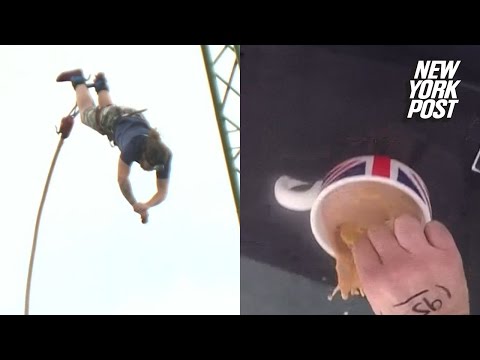
STEP 1: Initial Measurements and Ideas
1. Given that a typical Barbie Doll follows a play-scale of 1:6, determine the height of each of the following:
a. The height of an 11 inch Barbie if they were a real sized human.
b. The height of a 35 foot drop in real life, if it were scaled down into play-scale in feet.
c. The height of a 35 foot drop in real life, if it were scaled down into play-scale in inches.
d. The height of a 100 foot drop in real life if it were scaled down into play-scale in inches.
2. Complete the following conjectures on your own, do not ask another person for their answer until you have made your own estimates first.
Hypothesis A: I believe _______ is the maximum number of rubber bands needed to keep the doll safe if it fell proportionate to its height 35 feet.
Hypothesis B: I believe _______ is the maximum number of rubber bands needed to keep the doll safe if it fell proportionate to its height 100 feet.
The activity allows students to understand what bungee jumping is, recall what they know about scale models, think about physics, make predictions, and share their thoughts. This provided a good foundation for a rather successful lesson that I tried just last year. I think I may have mentioned something about the purpose of the activity during the video, but above where you see (*) I may include a sentence such as… Using a scale model we can examine how the jump lengths can be maximized safely.
KEN YOU PROTECT BARBIE?
A typical fall from a bungee jump is about 35 to 40 feet. Some extreme jumps can be 100 feet or more. (*)We will model these jumps using dolls and determine the maximum number of rubber bands to create the biggest thrills without injuring the dolls. Here is a video of a 240 foot bungee jump:
STEP 1: Initial Measurements and Ideas
1. Given that a typical Barbie Doll follows a play-scale of 1:6, determine the height of each of the following:
a. The height of an 11 inch Barbie if they were a real sized human.
b. The height of a 35 foot drop in real life, if it were scaled down into play-scale in feet.
c. The height of a 35 foot drop in real life, if it were scaled down into play-scale in inches.
d. The height of a 100 foot drop in real life if it were scaled down into play-scale in inches.
2. Complete the following conjectures on your own, do not ask another person for their answer until you have made your own estimates first.
Hypothesis A: I believe _______ is the maximum number of rubber bands needed to keep the doll safe if it fell proportionate to its height 35 feet.
Hypothesis B: I believe _______ is the maximum number of rubber bands needed to keep the doll safe if it fell proportionate to its height 100 feet.
The activity allows students to understand what bungee jumping is, recall what they know about scale models, think about physics, make predictions, and share their thoughts. This provided a good foundation for a rather successful lesson that I tried just last year. I think I may have mentioned something about the purpose of the activity during the video, but above where you see (*) I may include a sentence such as… Using a scale model we can examine how the jump lengths can be maximized safely.