"People think that number flexibility is not allowed and that math is all about following rules" (Boaler 152).
I am really good at math calculations in my head. If we go to the store, my wife asks me roughly what a product will cost with percentages off and with tax. I use conceptual methods to figure it out. However, I have a harder time helping my elementary children with math problems because I'm not sure the new and current ways to answer problems. I know the answers to the problem, I just can't answer it the way the teacher wants it recorded.
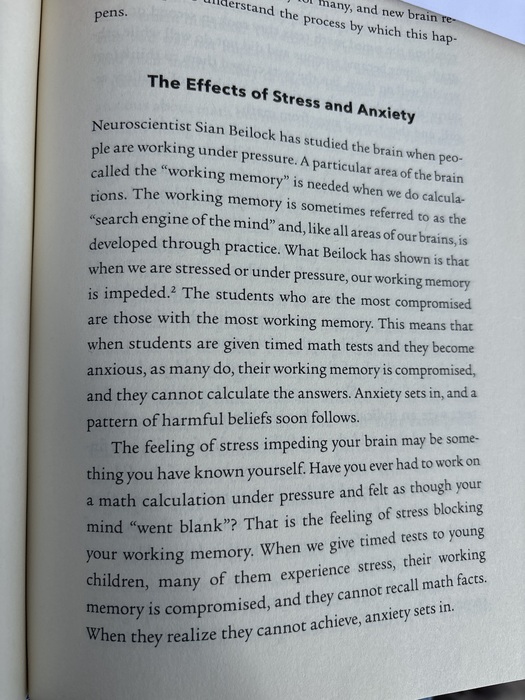
Time pressure and stress can significantly impact children's ability to perform critical thinking tasks in math. Under stress, the brain's cognitive resources are diverted toward managing anxiety rather than problem-solving, which can hinder working memory and focus. As a result, kids may struggle to think through complex problems, make careless mistakes, or resort to simpler, less effective strategies to cope with time pressure. Additionally, stress can reduce creativity and flexibility in thinking, making it harder for them to approach problems from different angles or think critically. Overall, time pressure and stress negatively affect both performance and confidence in solving math tasks.