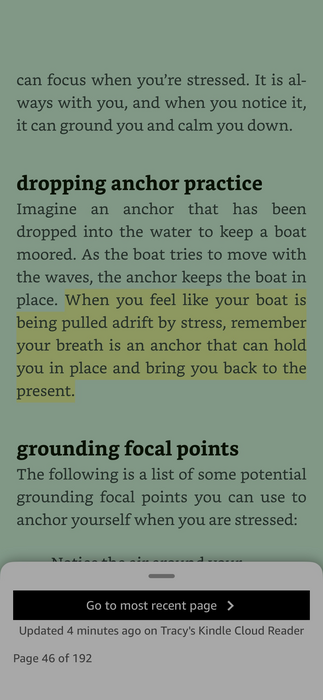
Sometimes, we get so caught up in our stress that we forget to put our anchors down. Taking deep breaths can help us feel anchored and focus on our breathing and begin to focus less on what is making us stressed.
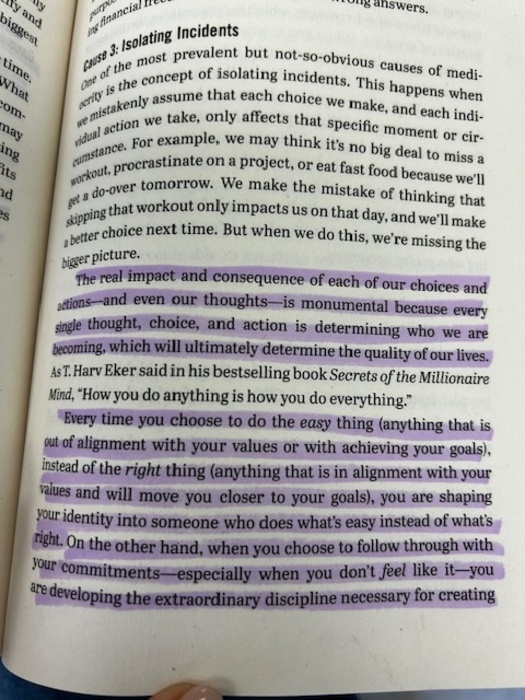
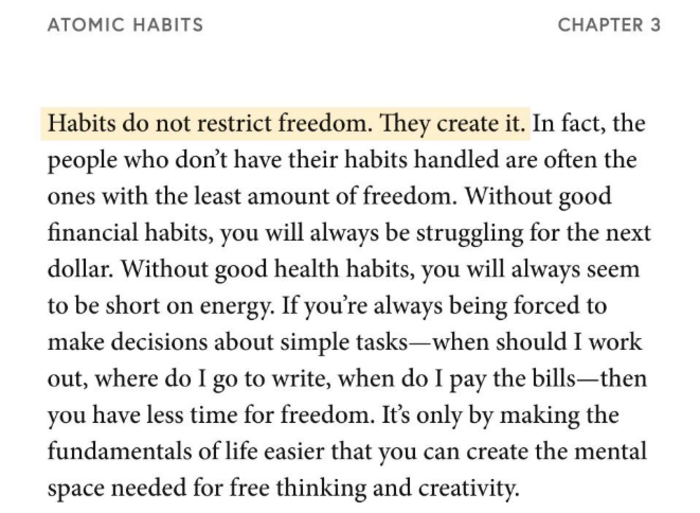
When you choose to follow through with your commitments - especially when you don't feel like it- you are developing the extraordinary discipline necessary for creating extraordinary results in your life.
The idea that habits will make your life dull or take away spontaneity is false. Habits will allow you more freedoms- financial, health, etc.
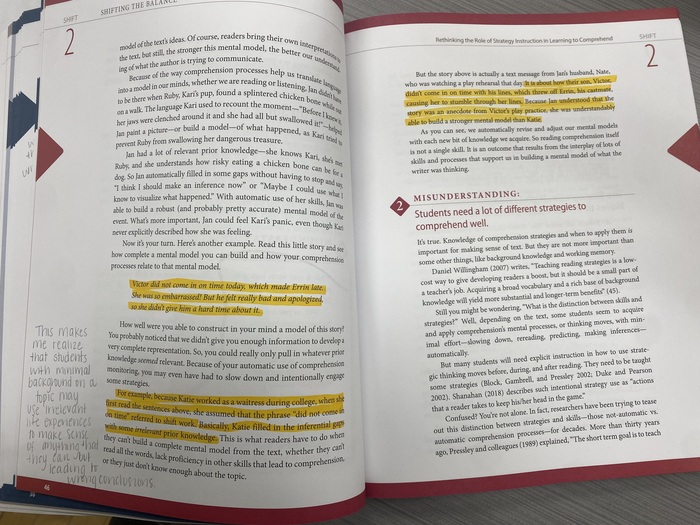
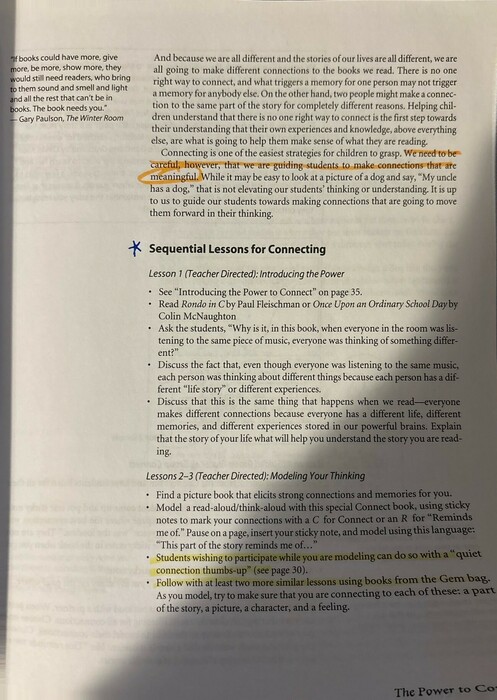
This chapter, “The Power to Connect” is similar to chapter two. It does go a bit more in-depth as to the exact steps that can be used to help students make connections while they are reading. While I feel like I already do this in my classroom, I am beginning to think I need to model it more often than I do. The highlighted section on page 37 hit home for me. So many students make connections but we need to be more conscious of making sure those connections are meaningful. As teachers, we need to model what that looks like.
I absolutely love that at the end of the chapter, there is a list of books teachers can use to help model the power to connect while reading. It is a comprehensive list and well thought out. This will be a big time saver for me. Some books are better than others for teaching various strategies and this list will be very beneficial.
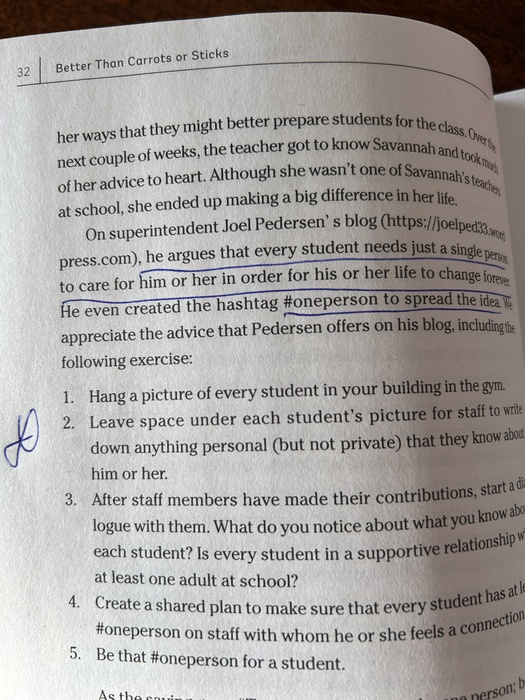
"...every student needs just a single person to care for him or her in order for his or her life to change forever." pg. 32
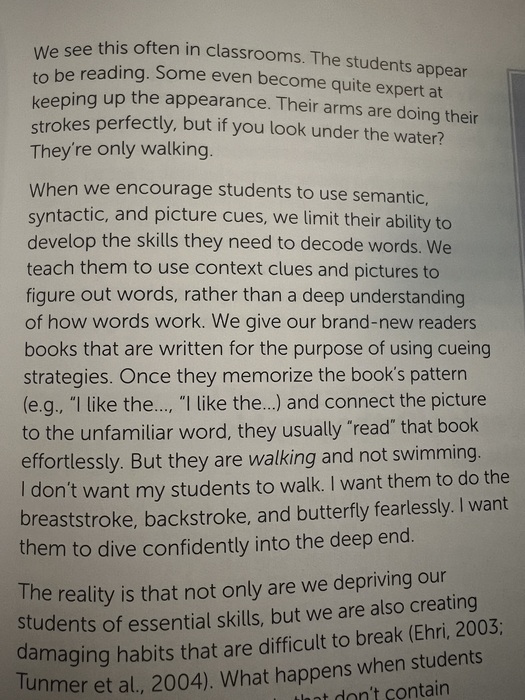
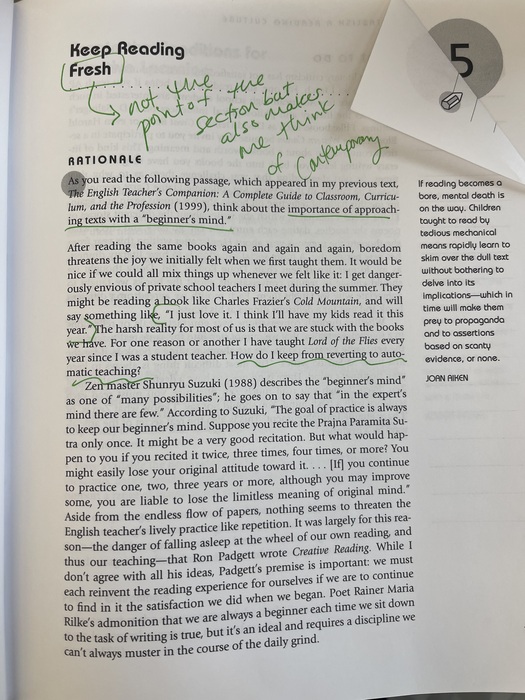
Discusses the 'rut' one can fall into when teaching a book for years on end. Mostly reinforced my goal to incorporate a contemporary novel
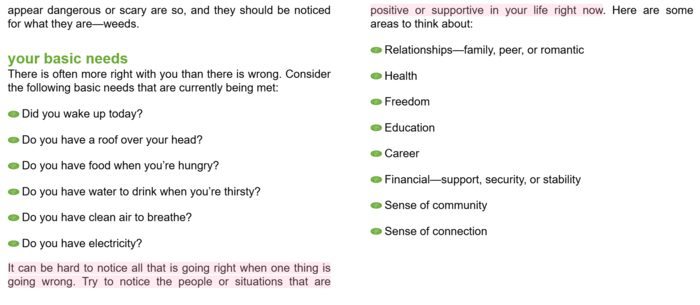
Try not to dwell on the negative. Focus on what you do have. It is so easy to get stressed out over the little things, especially for our teens. It is important to take a step back and see everything that is going right in our lives to realize that what's stressing you out may not be as bad as you first thought.
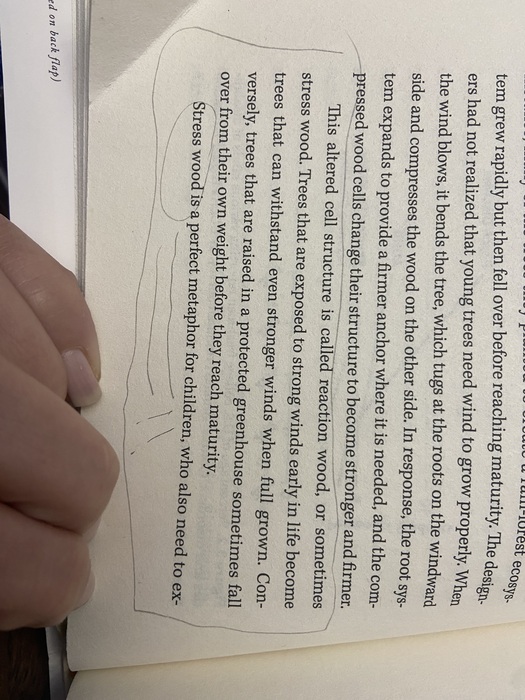
p. 72 This was thought-provoking, but also common-sense! Kids need regular stress in their lives (like stress wood) to gain resiliency!


 Choose YOUR book, Book Study 2025-2026
 tracy-fountain
9 months ago
tracy-fountain
9 months ago
 rebeccamc
9 months ago
rebeccamc
9 months ago
 eileenjroth04
10 months ago
eileenjroth04
10 months ago
 katie-jadhon
11 months ago
katie-jadhon
11 months ago
 rachel-knapp
12 months ago
rachel-knapp
12 months ago
 lauren-mccarthy
About 1 year ago
lauren-mccarthy
About 1 year ago
 cpiazza
About 1 year ago
cpiazza
About 1 year ago
 christinamalara
About 1 year ago
christinamalara
About 1 year ago
 michelle-hogan
About 1 year ago
michelle-hogan
About 1 year ago
 carrie-callan
About 1 year ago
carrie-callan
About 1 year ago