

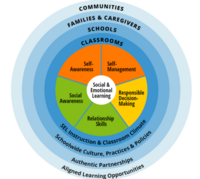

Self-management is the ability to regulate one's emotions,
thoughts, and behaviors in different situations to achieve personal and
academic goals effectively. It involves
skills such as impulse control, stress management, organization, and time
management.
In my math classroom, I encourage self-management through the implementation of goal-setting and tracking systems. One specific way I do this is by having students set weekly or monthly math-related goals and track their progress towards achieving them. At the beginning of each week or month, students reflect on their strengths and areas for growth in math and set specific, measurable, attainable, relevant, and time-bound (SMART) goals. These goals may include improving their accuracy in problem-solving, mastering a specific mathematical concept, or completing a certain number of practice problems. Throughout the week or month, students monitor their progress towards their goals using individual goal-tracking sheets or digital platforms. They regularly review their progress, adjust their strategies as needed, and celebrate their achievements. By engaging in goal-setting and tracking, students develop self-awareness of their strengths and weaknesses in math, learn to set realistic and achievable goals, and practice self-management skills such as planning, prioritizing, and perseverance. This empowers them to take ownership of their learning and become more effective and independent learners in the math classroom.
In my math classroom, I encourage self-management through the implementation of goal-setting and tracking systems. One specific way I do this is by having students set weekly or monthly math-related goals and track their progress towards achieving them. At the beginning of each week or month, students reflect on their strengths and areas for growth in math and set specific, measurable, attainable, relevant, and time-bound (SMART) goals. These goals may include improving their accuracy in problem-solving, mastering a specific mathematical concept, or completing a certain number of practice problems. Throughout the week or month, students monitor their progress towards their goals using individual goal-tracking sheets or digital platforms. They regularly review their progress, adjust their strategies as needed, and celebrate their achievements. By engaging in goal-setting and tracking, students develop self-awareness of their strengths and weaknesses in math, learn to set realistic and achievable goals, and practice self-management skills such as planning, prioritizing, and perseverance. This empowers them to take ownership of their learning and become more effective and independent learners in the math classroom.