

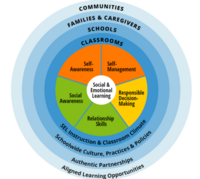

A key learning about responsible
decision-making is the ability to consider ethical, social, and academic
factors when making choices and taking action. It involves identifying and
evaluating options, weighing the potential consequences, and making informed
decisions that align with one's values and goals.
In my math classroom, I promote responsible decision-making through problem-solving activities that require students to analyze real-world scenarios and make decisions based on mathematical principles and ethical considerations. One specific way I do this is by incorporating case studies or mathematical dilemmas into our curriculum. For example, I might present students with a scenario involving budgeting decisions, where they must allocate limited resources to different expenses while considering factors such as needs versus wants, cost-benefit analysis, and long-term financial planning. I facilitate discussions where students explore the mathematical aspects of the scenario, as well as the ethical implications of their decisions. Students are encouraged to consider various perspectives, brainstorm potential solutions, and justify their choices using mathematical reasoning and critical thinking skills. Through this process, students learn to apply mathematical concepts to real-world situations, evaluate the consequences of their decisions, and make responsible choices that reflect their understanding of mathematical principles and ethical values. By engaging in problem-solving activities that integrate responsible decision-making, students develop essential life skills that will serve them well beyond the math classroom, empowering them to navigate complex situations and make thoughtful choices in their personal and academic lives.
In my math classroom, I promote responsible decision-making through problem-solving activities that require students to analyze real-world scenarios and make decisions based on mathematical principles and ethical considerations. One specific way I do this is by incorporating case studies or mathematical dilemmas into our curriculum. For example, I might present students with a scenario involving budgeting decisions, where they must allocate limited resources to different expenses while considering factors such as needs versus wants, cost-benefit analysis, and long-term financial planning. I facilitate discussions where students explore the mathematical aspects of the scenario, as well as the ethical implications of their decisions. Students are encouraged to consider various perspectives, brainstorm potential solutions, and justify their choices using mathematical reasoning and critical thinking skills. Through this process, students learn to apply mathematical concepts to real-world situations, evaluate the consequences of their decisions, and make responsible choices that reflect their understanding of mathematical principles and ethical values. By engaging in problem-solving activities that integrate responsible decision-making, students develop essential life skills that will serve them well beyond the math classroom, empowering them to navigate complex situations and make thoughtful choices in their personal and academic lives.