
Choose YOUR book, Book Study 2025-2026

Book Snap #5 Lessons from the book

Only editable by group admins

  • Last updated July 29, 2025 at 9:36 AM
  • Evidence visible to public
You can snap any way you'd like, but it must include... -pic of the text -specific line or line that you draw our attention to (highlight, underline, etc.) -emoji -text annotation -audio recording that explains the book snap at an even deeper level

All posted evidence

The Gaps are real!

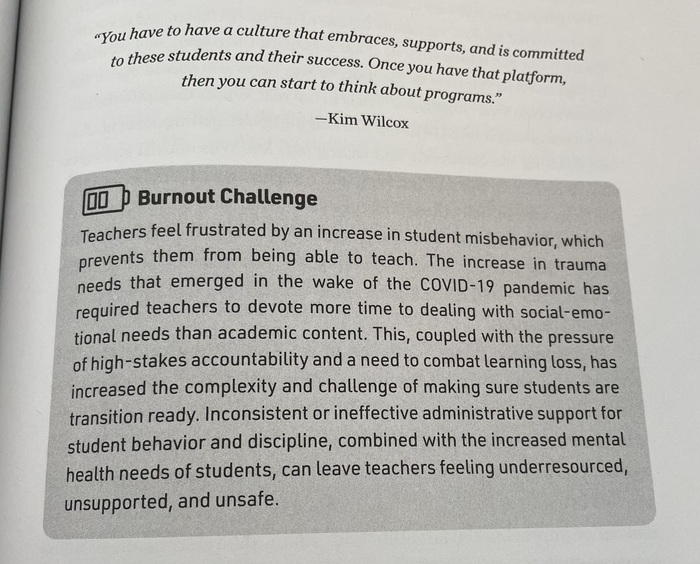
Now that Covid-19 has passed I feel like we are still seeing the remnants of it. We have students coming to the secondary level with clear learning gaps. This could be from the pandemic and not having the support they needed at home which could have been for a variety of reasons or just that they weren’t taking their school work seriously at that point and time because it was in a way a lackadaisical time because everyone was remote and not getting the normal mode of instruction. But what we are seeing is that now the pressure has been put on the teachers to close these gaps which cannot be fixed overnight.
abrownsell 2 months ago

C-19 put more pressure on us, we were required to do much more with less at times and in many cases our students had difficulty thriving!

abrownsell 3 months ago

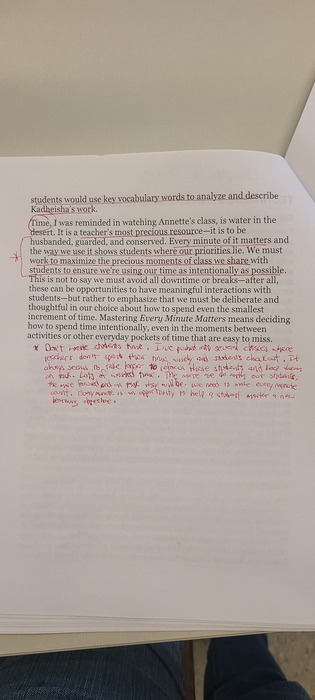
Technique 31: Every Minute Matters

cpiazza 3 months ago

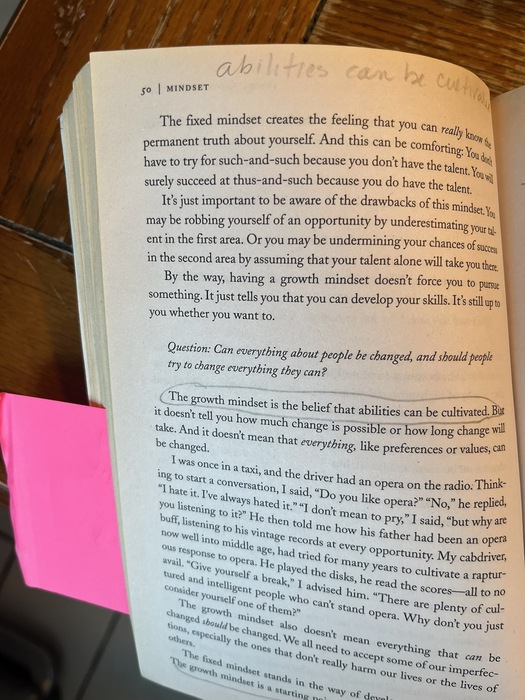
The growth mindset is a starting point for change- but it doesn't mean that everything can be changed.

rochelle-lynch 4 months ago

Posted Image

jennifer-ryan 5 months ago

Transitions

One of the aspects of the book that I appreciate most is the simplicity of explanations. When explaining transition words, Hochman and Wexler state, " Transitions are often called signal words because they signal, or indicate, a relationship between ideas. They can make text smoother and help minimize the confusion that brief or unelaborated statements can cause" (88).

The authors then go on to write, "Explain to students that, as a general rule, when transitions appear at the beginning of a sentence, they are followed by a comma" (88). Exactly. Interestingly, many 8th graders still struggle with transition usage in their writing. And, I notice that juniors and seniors STILL struggle with selecting the correct transitions, as evidenced by missed SAT questions.

Students often understand certain categories of transitions, like basic time sequence words, but they often struggle with illustration, change of direction, and emphasis transitions.  They need to be explicitly taught, and the teaching needs to be more than giving students a worksheet.

Once again, asking students to write ONE SENTENCE with a transition is a viable activity.
kelly-paul 6 months ago

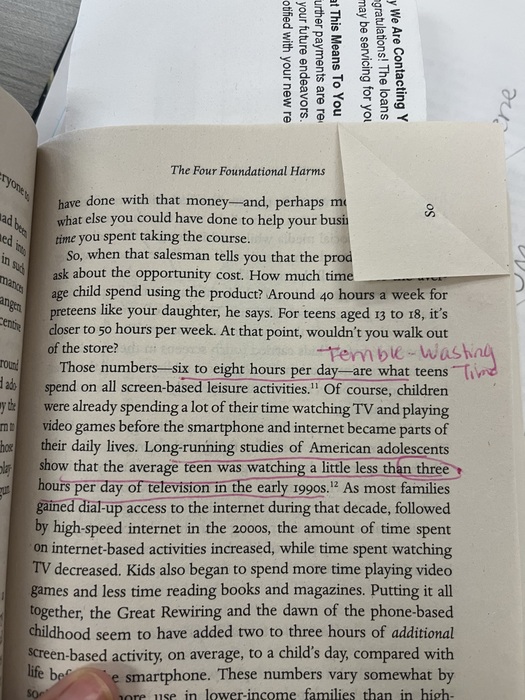
Screen Time. Years ago in 1990, the average time kids spent on screens was 3 hours a day. That was time mostly spent watching TV. I was a teenager at that time. Currently screen time is up to 6-8 hours a day for the average teenager. This is astounding how much time kids spend on screens. They are missing out on so much living. The book goes on to say that 112 hours a week is the amount of time that kids are not actively not present. This is extremely alarming. Again, kids are not learning real life skills and social skills they need to be decent functioning human beings.

emily-ryan 6 months ago

Snap # 5

"Rome was a city of horrible smells. Rubbish and sewage, even occasionally, human corpses, were tipped into the street. Passerby were so often hit by the contents of chamber pots emptied from the second floor or the roof that laws were passed regulating the damages that could be claimed" (Everitt 164).

This struct me as surprising. I knew that during Medieval Europe, this would have been common. However, when looking at one of the world's greatest empires, I would of thought it would have been much more of a cleaner empire.
rjayne 7 months ago

Lesson / Take away - Mental Health

Growing up mental health issues were not as common as they are toda - or I should say may not have been identified and spoken about as it is today.  I related to this quote on page 28 - "When teachers bring up mental health as one of their top three concernsfacing young people today, it is partly because they fear the impact of the disorder on the childc, and partly because it is extremely difficult to know what to do when one of the young people in your care is struggling."  This is spot on as an educator and a parent.  I have seen first hand how mental health issues can turn into physical ailments.  Someone close to me once needed to go to the ER from work because they all of a sudden he was having breathing issues and vitals off the charts, and complained loss of feeling in legs - couldn't walk etc.  Turns out he was physically fine, but had an axiety attack from something concerning to him at work.  I love how the rest of this chapter discusses how to go about asking people in crisis what can we do for them, and be good listeners, rather than just throw out our random ideas, or not seeing their concerns and anxiety as real.  It is so hard to remember this.  Again, trying to fix things right away is not the answer.  
joan-loughran 8 months ago