


Birds as vectors for Borrelia
burgdorferi
Emily N. Ostrow1 and Jason D. Weckstein1
1Department of Biodiversity, Earth, and Environmental Sciences and Academy of Natural Sciences of Drexel University, Ornithology Department, Philadelphia, Pennsylvania, United States of America
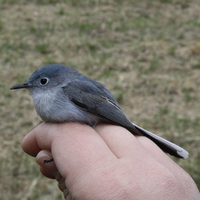
Lyme Disease is the most prevalent vector borne disease in North America. It is caused by the bacteria Borrelia burgdorferi s.l., which has a complex life history involving a tick vector and vertebrate host. Recent work on the population genetics of the tick vector Ixodes scapularis and Borrelia burgdorferi indicates that their genetic population structures do not match. The tick Ixodes scapularis has structured populations indicating little movement across geographic space, whereas the bacterium Borrelia burgdorferi has little structure indicating greater movement across geographic space, suggesting that the ticks are not the primary dispersers of the pathogen across geography. Therefore, one of the vertebrate hosts is likely more important than the tick vector in determining the population structure of Borrelia. I am analyzing birds as a potential long distance dispersal agent for Borrelia. Many migratory bird species travel thousands of miles, twice annually, and are known to act as hosts for larval and nymphal Ixodes ticks. I will screen ~3000 individuals with tissue and blood samples collected from migrant birds in Chicago, Illinois and in Chester and Bucks counties, Pennsylvania. I am extracting DNA from these tissues and using a nested polymerase chain reaction (PCR) protocol and specific primers to screen for DNA from the 5S-23S intergenic spacer region of the Borrelia genome. Positive amplifications indicate a Borrelia infection. I will sequence the products of all positive samples to characterize and identify the specific strains of Borrelia burgdorferi present. Preliminary results with approximately 200 local birds suggest that there is a high prevalence of Borrelia infecting birds in this region compared to other published results. In-depth analyses with these data will help us to understand variation in pathogen prevalence across regions (NE versus Midwestern US), across seasons (fall versus spring migration), and between host species.
Emily N. Ostrow1 and Jason D. Weckstein1
1Department of Biodiversity, Earth, and Environmental Sciences and Academy of Natural Sciences of Drexel University, Ornithology Department, Philadelphia, Pennsylvania, United States of America
Lyme Disease is the most prevalent vector borne disease in North America. It is caused by the bacteria Borrelia burgdorferi s.l., which has a complex life history involving a tick vector and vertebrate host. Recent work on the population genetics of the tick vector Ixodes scapularis and Borrelia burgdorferi indicates that their genetic population structures do not match. The tick Ixodes scapularis has structured populations indicating little movement across geographic space, whereas the bacterium Borrelia burgdorferi has little structure indicating greater movement across geographic space, suggesting that the ticks are not the primary dispersers of the pathogen across geography. Therefore, one of the vertebrate hosts is likely more important than the tick vector in determining the population structure of Borrelia. I am analyzing birds as a potential long distance dispersal agent for Borrelia. Many migratory bird species travel thousands of miles, twice annually, and are known to act as hosts for larval and nymphal Ixodes ticks. I will screen ~3000 individuals with tissue and blood samples collected from migrant birds in Chicago, Illinois and in Chester and Bucks counties, Pennsylvania. I am extracting DNA from these tissues and using a nested polymerase chain reaction (PCR) protocol and specific primers to screen for DNA from the 5S-23S intergenic spacer region of the Borrelia genome. Positive amplifications indicate a Borrelia infection. I will sequence the products of all positive samples to characterize and identify the specific strains of Borrelia burgdorferi present. Preliminary results with approximately 200 local birds suggest that there is a high prevalence of Borrelia infecting birds in this region compared to other published results. In-depth analyses with these data will help us to understand variation in pathogen prevalence across regions (NE versus Midwestern US), across seasons (fall versus spring migration), and between host species.