
Choose YOUR book, Book Study 2025-2026

Book Snap #7 Lessons from the book

Only editable by group admins

  • Last updated July 29, 2025 at 9:36 AM
  • Evidence visible to public
You can snap any way you'd like, but it must include... -pic of the text -specific line or line that you draw our attention to (highlight, underline, etc.) -emoji -text annotation -audio recording that explains the book snap at an even deeper level

All posted evidence

A system for close reading

The authors' definition:  "Close reading is when students are attending carefully to a text, reading it several times, each for a different purpose, and mining it for all they possibly can, while you are close by observing, facilitating, and coaching as needed."
This part of the book incorporates all of the previous things the authors advocate for teachers to use.  They introduce their system for close reading, but are quick to point out that there is not one "best way" to do it.  They suggest making a system that will work for you and your students after reading about theirs.
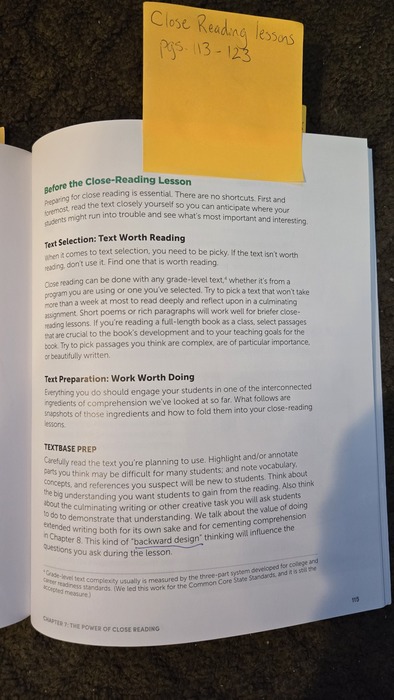
Before the close-reading lesson:  be picky about text selection and anticipate parts that may be difficult for students (like vocabulary, syntax, and knowledge issues) by reading the text like a student.
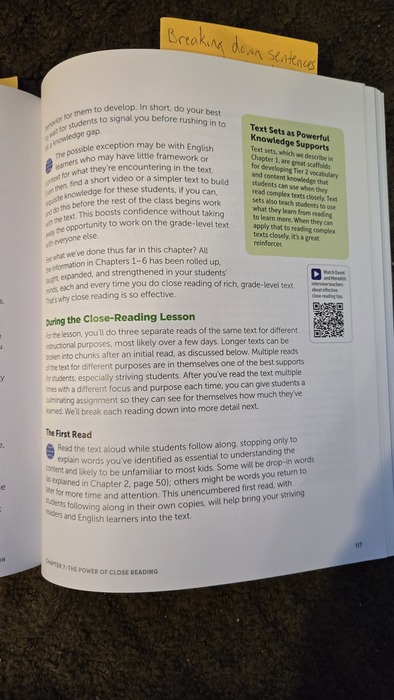
During the close-reading lesson: three separate reads of the text for different purposes 
(1st read- teacher reads while students follow long, 2nd read- students reread to answer questions, 3rd read- focus on the meatiest parts of the text)
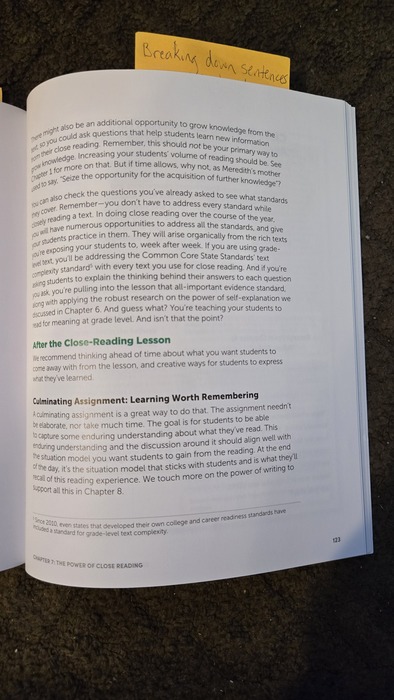
After the close-reading lesson: a culminating assignment for students to express what they've learned
When the Common Core Learning Standards came out, we did close reading lessons with our classes.  But the texts we attempted to use were so complex and above grade level that most students couldn't make much sense of them.  I'm glad to see this system of close reading that, after enough practice, students could maybe start to use on their own when trying to unpack a difficult text.
kate-sfeir About 17 hours ago

After the close reading lesson...

kate-sfeir About 17 hours ago

During the close reading lesson...

kate-sfeir About 17 hours ago

Before the close reading lesson

kate-sfeir About 17 hours ago

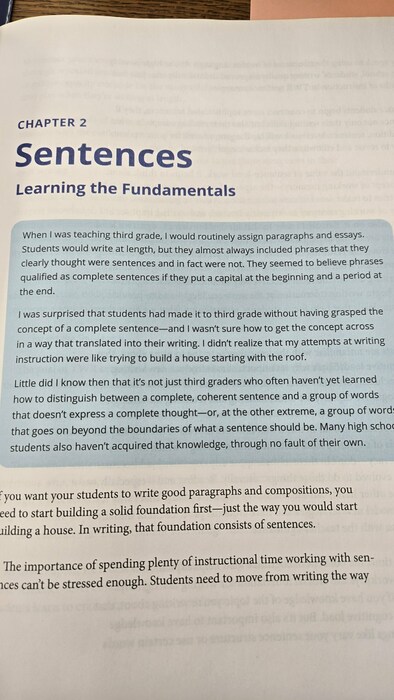
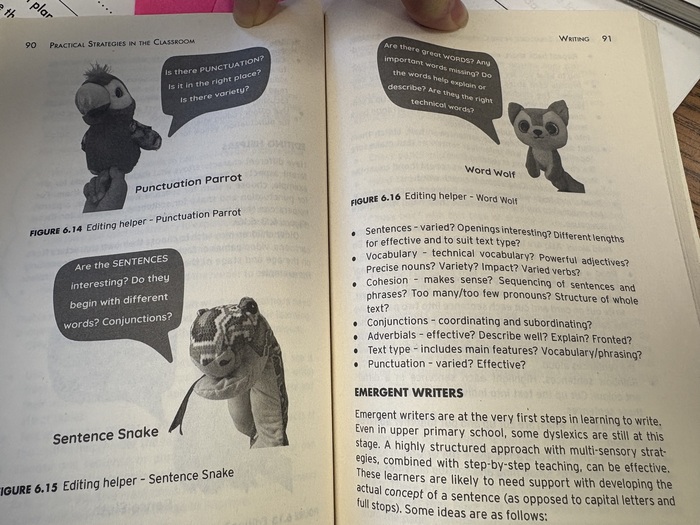
As a third grade teacher, this page really resonates with what I see in my own classroom. Although some students may be eager to write, many of them still struggle to tell the difference between a complete sentence and just a group of words. They’ll add a capital letter and a period and think that makes it a sentence, even when the idea isn’t complete. It reminds me how important it is to slow down and focus on the basics before expecting strong paragraphs or essays. If students don’t have a solid understanding of sentences, everything else becomes much harder. This reinforces for me that I need to spend more time teaching and practicing sentence writing so my students can build a stronger foundation for all their future writing.

gyanuk 4 days ago

Posted Image

talia-gallagher 6 days ago

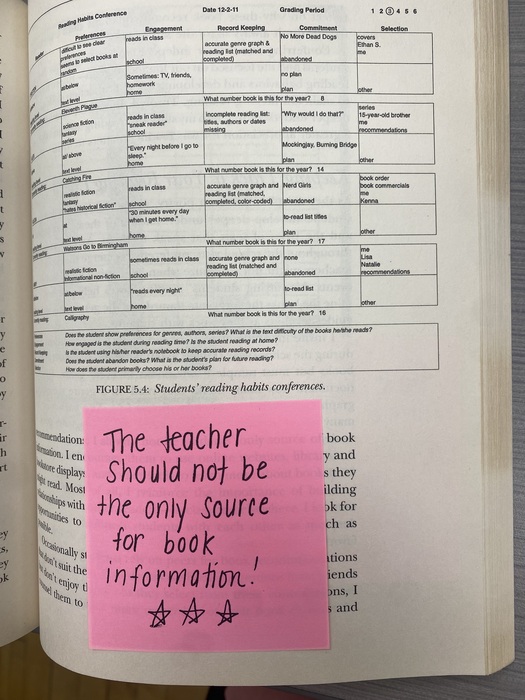
Chapter 7: Planning and managing conferring time

Chapter 7 of Reading Conferences by Jennifer Serravallo focuses on something  I struggle with: how to actually make conferring happen consistently during real classroom time. This is one of the toughest parts to manage.I got many helpful tips! Serravallo explains that conferring doesn’t just “fit in” naturally you have to schedule and prioritize it. Without a plan, it’s easy to get pulled into other tasks and miss opportunities to meet with students.
Use a system to stay organized
 Be intentional about who you meet with
Keep conferences short and focused
Balance flexibility with structure
I learned that conferring isn’t just about what you say to students it’s about how well you manage your time and stay organized. If you don’t have a system, it’s easy to miss students or lose track of their progress. Good conferring depends on both planning and flexibility.
jennifer-ryan 7 days ago

The entire writing process is very difficult for a dyslexic student. Here are some positive, purposeful "editing helpers" that I will use

broberts 9 days ago

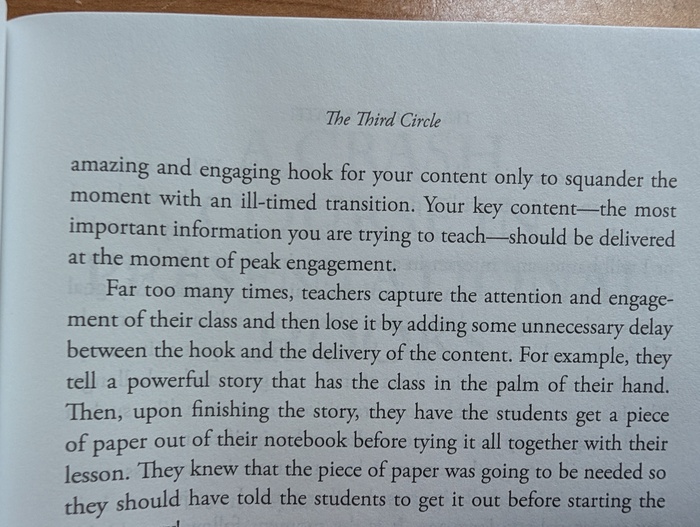
Snap 7

greg-soposki 15 days ago

Schools - chapter 17

This resonated with me. If we don’t take the time to do this, then students are not getting what they need to be ready to learn and grow. 
 Creating an emotionally supportive school environment 

1. sensory friendly classrooms - include equipment like seats that spin or bounce, chair bands, fidgets, the ability to stand. Decrease visual stimulation. Movement breaks - Ask what does the environment need for each child to thrive?

2. emotions as part of the culture - look beyond behavior to find the need that’s driving it. All feelings are mentionable and manageable (Mr. Rogers). 
3. Power instead of power over - be a community with our students
amber-wagner 16 days ago

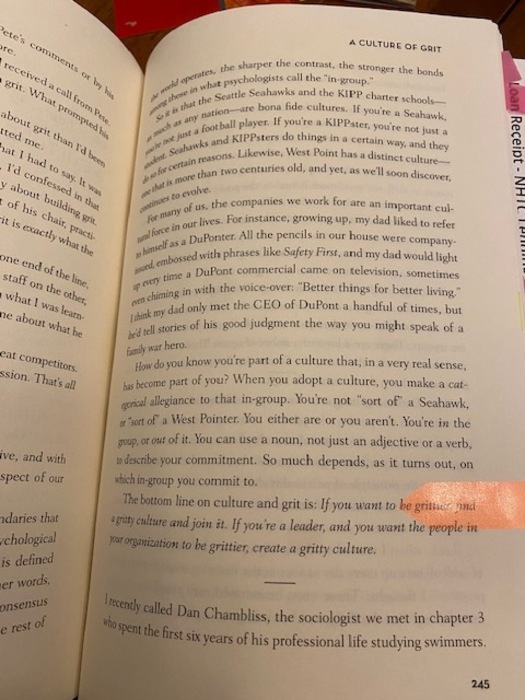
Create a Culture of Grit, people won't be develop Grit if they aren't in it. Use set backs as a way to grow as a group and individually

emily-gillander 21 days ago

Snap 7

"I don't value students' working quickly; I value their working in depth, creating interesting pathways and representations.'

This resonated with me because many students believe that being "good at math" means being fast.  At this age students are developing confidence in their abilities, and speed can create unnecessary pressure and anxiety.   By valuing depth over speed, a teacher can shift their classroom culture to focus on understanding, reasoning, and multiple strategies.  This helps students feel more comfortable taking risks explaining their thinking, and learning from mistakes, which are key components in building a positive math mindset and reducing the "I am not a math person" narrative.  
nickolasbuckley About 1 month ago