Choose YOUR book, Book Study 2025-2026

Book Snap #4 Lessons from the book

Only editable by group admins

  • Last updated July 29, 2025 at 9:36 AM
  • Evidence visible to public
You can snap any way you'd like, but it must include... -pic of the text -specific line or line that you draw our attention to (highlight, underline, etc.) -emoji -text annotation -audio recording that explains the book snap at an even deeper level

All posted evidence

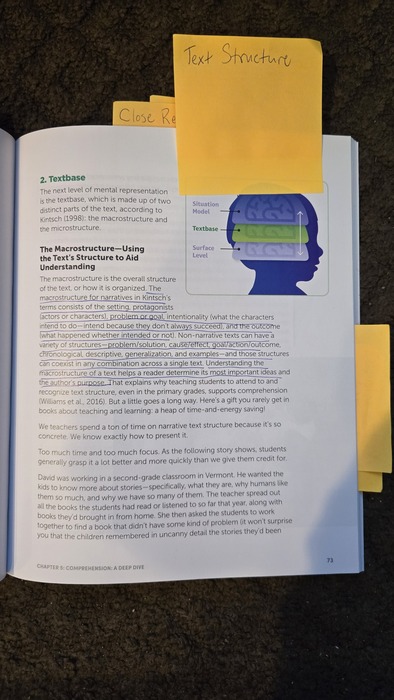
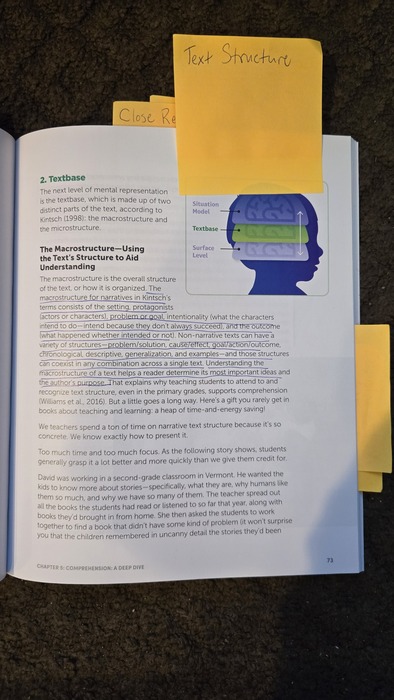
Three Levels of Text Representation in the Mind

The authors introduce three levels of text representation: surface level, textbase (macrostructure and microstructure), and the situation model.  I have read other sources that stress the importance of text structure to reading comprehension, so I especially noted what the authors had to say about the "macrostructure- using the text's structure to aid undersanding." 
Because narrative text structure is so concrete, they say that teachers spend too much time and focus too much on it.  Students grasp narrative structure easily.  Teachers are better off focusing more time on informational text structures, which are not as simple and intuitive, but will assist students' comprehension when they notice and understand them.  For example, "if students notice the information is structured as a problem-solution, they will first identify the problem and then have their antennae raised to look for proposed solutions.  If readers are aware they're reading a persuasive text, they'll be on the lookout for the argument and compelling evidence.  If readers know they're reading a description, they'll be aware that they should gather information that identifies what's being described."
I like this way of describing text structure to students- that it helps them know what to read for in a text.  I have never seen it explained that way before!
kate-sfeir 1 day ago

Using Text Structure to Aid Understanding

kate-sfeir 1 day ago

Using Text Structure to Aid Understanding

kate-sfeir 1 day ago

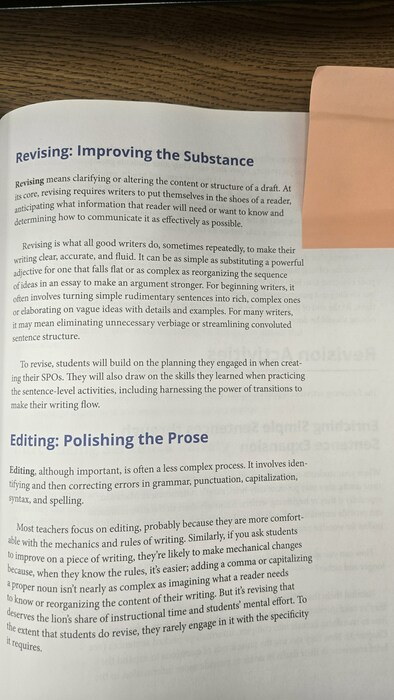
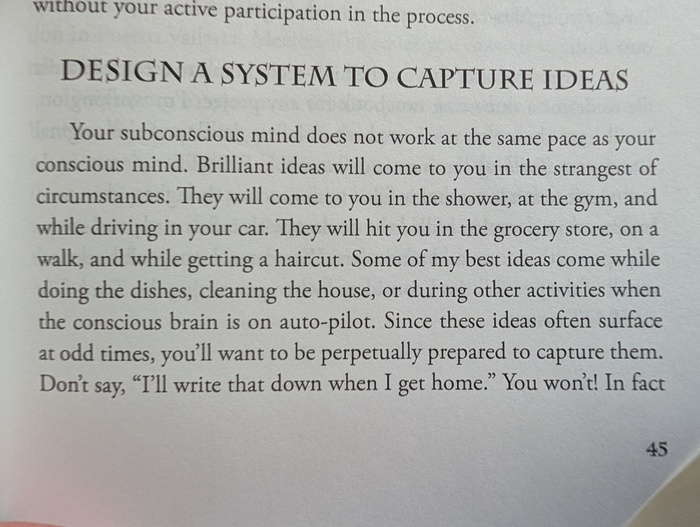
My third grade students have always struggled with this step of the writing process. Revision means making your writing better—not just correcting errors, but improving how clearly and effectively you communicate your ideas.

gyanuk 5 days ago

Posted Image

talia-gallagher 7 days ago

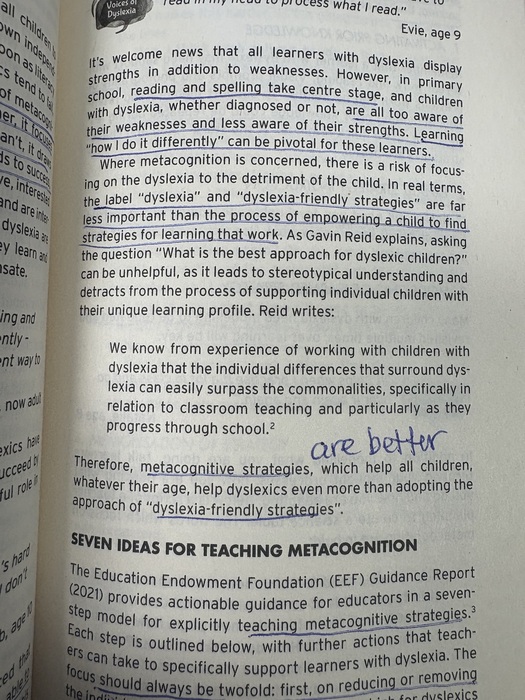
Metacognitive strategies are better for the learner because they focus on what the learner does rather than what they can't..their strengths

broberts 9 days ago

Snap 4

greg-soposki 15 days ago

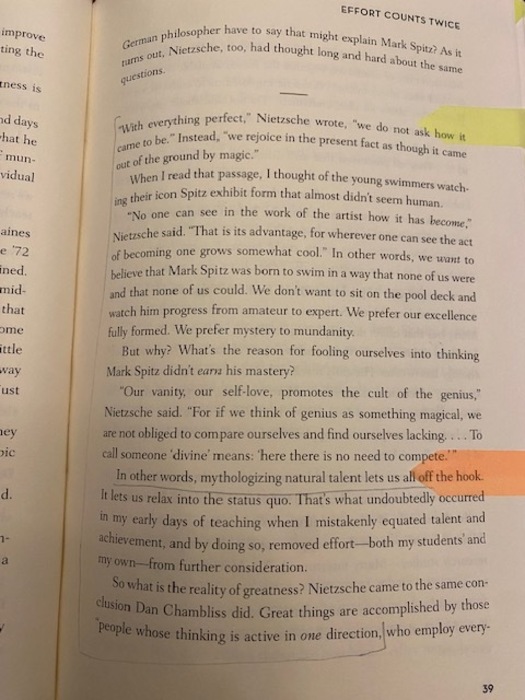
Effort. This passage in the book is highlighting how effort is mistaken it for talent and that talent is something you can't grow - wrong!

emily-gillander 21 days ago

On pgs.26-27 the authors provide an example of "retrieval practice"

On page 26, the authors provide a real-world example of "retrieval practice":
Q: What did you have for breakfast yesterday?
Q: In what year did King Tut become pharaoh?
Q: Do you remember how old he was?
Most importantly, the justification the authors provide for this questioning technique is as follows:
"What's with these harebrained questions?  Well, they help us talk about something that's tough to pinpoint - learning.  In this example, you may have learned something at some point, but forgot it (e.g. King Tut's age), or you simply think back and bring something to mind even if you didn't intentionally learn it (e.g. your breakfast yesterday).  You may have a fond memory for something you haven't thought about in a while (e.g. your favorite vacation) or you can probably remember something you recently learning with a little bit of effort (e.g. one thing from this book)........Learning is complex and messy.  It's not something we can touch, and it's really hard to define.  You might even say that the learning process looks more like a blob than a flowchart.
peter-anderson 22 days ago

Posted Image

amber-wagner 25 days ago

Snap 4

"Students rarely think that they are in math classrooms to appreciate the beauty of mathematics, to ask deep questions, to explore the rich set of connections that make up the subject......they think they are in math classrooms to perform."
This excerpt highlights a major issue many middle school math teachers face.  Students often view math as simply getting the right answer rather than understanding and exploring ideas.  At the Middle school level, students are forming long term attitudes towards about math, so it is critical to shift their mindset from performance to curiosity and growth.  If teachers focus only on correct answers and speed, students may develop anxiety or disengage.  However, by encouraging discussion, problem-solving, and making connections, teachers can help students see math as meaningful and creative.  
nickolasbuckley About 1 month ago

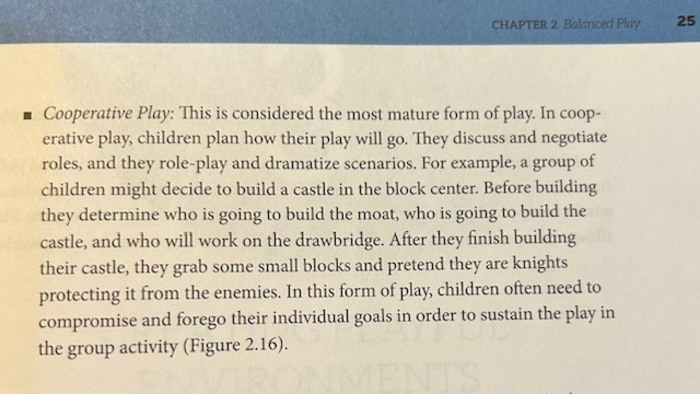
1. Unoccupied Behavior 2. Onlooker Behavior 3. Solitary Play 4. Parallel Play 5. Associative Play 6. Cooperative Play Play develops over time and each new stage offers new benefits and ways of thinking. *It wouldn't let me post both pages, with all 6 steps.

brie About 1 month ago