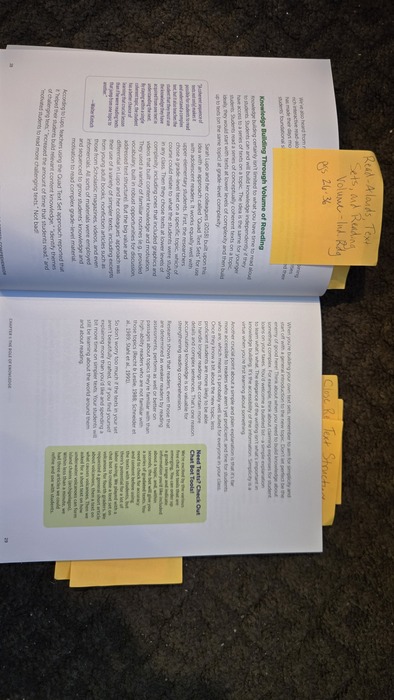
The authors advocate building through read-alouds, the use of text sets (reading a series of texts on a similar topic), and increasing students' reading volume (independent reading). Earlier in the school year, I offered PD in each building about the best instructional practices for read-alouds. NH's teacher-created SS/ELA Units use a variation of text sets because students are reading or being read texts on related topics throughout the unit.
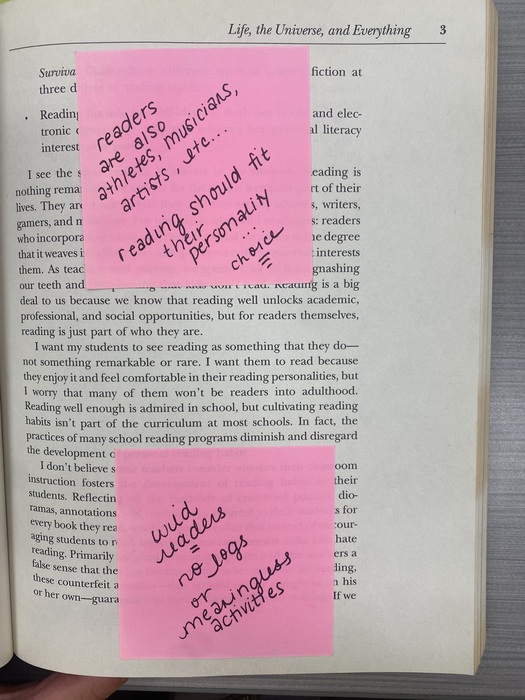
The ideas the authors present about increasing reading volume could be our next focus. For example: using a variety of simpler texts on a topic to grow students' knowledge and motivation to read complex grade-level material (pg 28), the idea that studies can't give us a target quantity of pages or texts or words but it's likely more than what students are able to do during a typical school day as currently structured (pg 31), and ideas about independent reading (making it a priority; letting students choose books based on current, upcoming, or previous class topics; and letting students choose books driven by their interests) pgs 34-36. We use to "require" teachers to have their students read indpendently for a certain number of minutes each week. I worry that since that "requirement" hasn't been revisited in some years, teachers are no longer finding time for students to read indepdently...
The ideas the authors present about increasing reading volume could be our next focus. For example: using a variety of simpler texts on a topic to grow students' knowledge and motivation to read complex grade-level material (pg 28), the idea that studies can't give us a target quantity of pages or texts or words but it's likely more than what students are able to do during a typical school day as currently structured (pg 31), and ideas about independent reading (making it a priority; letting students choose books based on current, upcoming, or previous class topics; and letting students choose books driven by their interests) pgs 34-36. We use to "require" teachers to have their students read indpendently for a certain number of minutes each week. I worry that since that "requirement" hasn't been revisited in some years, teachers are no longer finding time for students to read indepdently...